Business Insurance & Risk Placement, Powered by AI
upcover makes business insurance simple. Our AI-powered platform matches businesses with the right cover, streamlines placement, and enables partners to seamlessly embed and distribute insurance without outdated processes or long forms.
Online SME Insurance
Digital insurance for sole traders and small businesses. Apply online, get covered fast and manage it all paper-free.
AI-enabled Broking
Risk placement and underwriter matching for complex businesses. Specialist-led, AI-enabled and built for scale.
Digital Motor & Fleet Insurance
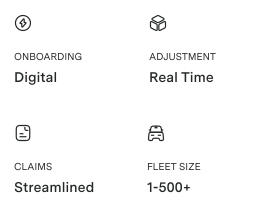
From single vehicles to large commercial fleets, manage coverage, adjustments and claims handling, all digitally.
1-Click Insurance Financing
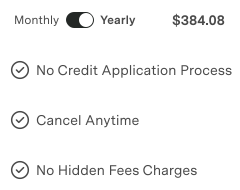
Pay monthly instead of upfront, without entering into a separate credit agreement. Cancel anytime without hidden fees.
Partner APIs & Storefronts
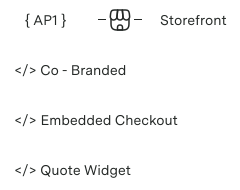
Platforms, lenders & marketplaces embed upcover via co-branded or API to sell insurance direct to customers.
Featured On
upcover is trusted by business owners and insurers alike
Do startups need directors and officers (D&O) insurance?
When should a startup buy business insurance?
What insurance do venture-backed startups typically need?
Do startups need management liability insurance?
Management liability insurance can be relevant for startups, even before a full board is in place. It is a type of business insurance designed to respond to certain claims made against a company and its managers about how the business is run.
Do startups need directors and officers (D&O) insurance?
Not always, but it is commonly requested once a startup has external investors, a board, or plans to scale. D&O is designed to respond to claims alleging wrongful acts in managing the company, subject to the policy terms.
It is often recommended to consider business insurance before you need it urgently, because the trigger is usually a contract, a hire, or a change in risk. Common times startups arrange insurance include before signing larger customer contracts, before raising capital, and before hiring employees. It is also common to consider cover before you start handling meaningful customer data, or before launching a physical product.
What insurance do venture-backed startups typically need?
Venture backed startups often see insurance needs come up earlier than other businesses, mainly because of investor expectations and enterprise contract requirements. Directors and officers insurance is often requested around or after a funding round, especially if the company is adding a board or independent directors. Professional indemnity, sometimes described as errors and omissions, is also commonly required in customer contracts, particularly for SaaS and technology services. Cyber insurance is often expected if you store customer data, process sensitive information, or connect into client systems. Employment practices liability becomes more relevant as headcount grows and hiring increases, because the risk of employment related claims generally rises with the size of the team. Example: After raising a Seed or Series A round, investors may ask the company to put directors and officers insurance in place as part of improving governance and meeting common board expectations.
What insurance does a sole trader need in Australia?
It depends on what you do, where you work, and what your clients require. A sole trader who works at customer sites may need different cover to someone who works online, from home, or sells products.
What insurance does a sole trader need in Australia?
It depends on what you do, where you work, and what your clients require. A sole trader who works at customer sites may need different cover to someone who works online, from home, or sells products.
Do sole traders legally need business insurance in Australia?
Often no, but there are some common exceptions. Insurance can be required by contract. For example, councils, venues, principal contractors, and some clients may ask you to hold certain insurance types and minimum limits, especially public liability, before they will let you start work.
Do sole traders legally need business insurance in Australia?
Often no, but there are some common exceptions. Insurance can be required by contract. For example, councils, venues, principal contractors, and some clients may ask you to hold certain insurance types and minimum limits, especially public liability, before they will let you start work.
Do sole traders need public and product liability insurance?
If you deal with the public, work at client sites, or have people visiting you, public liability is commonly requested. Product liability is usually relevant if you sell, supply, install, or manufacture products (including importing or re-labelling). Many insurers offer public and product liability together, but what’s included depends on the policy and what you’ve declared. If you only provide services, product liability may be less relevant, but it can still matter if you use products in your work (for example, beauty treatments).
Do sole traders need public and product liability insurance?
If you deal with the public, work at client sites, or have people visiting you, public liability is commonly requested. Product liability is usually relevant if you sell, supply, install, or manufacture products (including importing or re-labelling). Many insurers offer public and product liability together, but what’s included depends on the policy and what you’ve declared. If you only provide services, product liability may be less relevant, but it can still matter if you use products in your work (for example, beauty treatments).
Do sole traders need professional indemnity insurance?
Professional indemnity is most relevant if your work involves giving advice, designing something, or providing a professional service that a client relies on. It can also matter if you create plans or reports, or if you work under a contract that says you are responsible for errors or omissions.
Do sole traders need professional indemnity insurance?
Professional indemnity is most relevant if your work involves giving advice, designing something, or providing a professional service that a client relies on. It can also matter if you create plans or reports, or if you work under a contract that says you are responsible for errors or omissions.
Cyber insurance can be worth considering if you use email to take bookings or send invoices, store customer information, take card payments or sell online, or rely on software to run your business. Even small businesses can be affected by phishing, invoice scams, or a locked computer that stops you working.
Cyber insurance can be worth considering if you use email to take bookings or send invoices, store customer information, take card payments or sell online, or rely on software to run your business. Even small businesses can be affected by phishing, invoice scams, or a locked computer that stops you working.
Who Needs Professional Indemnity Insurance In Australia?
Understanding the definition and the different advantages of having professional indemnity insurance should be at the top of your to-do list, especially as a small business.
Are you wondering what is a sole trader? This article will help you understand what a sole trader is, and when it might be suitable for you to become one.
Public Liability Insurance for Sole Traders: What You Need to Know
Learn why public liability insurance is essential for sole traders, what it covers, and how to choose the right policy to protect your business from risks.
We’re on a mission to become a top-5 insurance distributor within the next decade, challenging legacy incumbents by providing a unique opportunity for forward-thinking agents.
The information contained on this website is general advice only and has been prepared without taking into account your individual needs, objectives and financial situation. It should not be relied upon as advice. All insurance products are subject to the terms, conditions, limits and exclusions contained in the relevant policy wording and Product Disclosure Statement. Before deciding whether a particular insurance product is right for you, please consider your personal circumstances and read the relevant Product Disclosure Statement, Target Market Determination, Policy Wording, and Financial Services Guide.





.svg)
.svg)
%201.svg)
.svg)


.svg)
.svg)
.svg)
.svg)
.svg)
.svg)
.svg)





.svg "antler")





.svg)

























.webp)

.webp)


.webp)


.webp)
.webp)


.svg)
.svg)
%201%20(1).svg)
.svg)

%20(1).svg)
%20(1).svg)










.webp)

.svg)


